
Account Structure
Campaign organization, naming, settings, and whether structure supports clear control and reporting.

Comprehensive Marketing Audits
Identify measurement gaps, evaluate campaign efficiency, and uncover practical opportunities to strengthen digital marketing performance.
Why Audit
Advertising programs drift. Campaigns are added, settings change, tracking breaks quietly, and platforms introduce new automation. An audit resets the baseline.
Our marketing audits examine the full chain from targeting and creative to tracking and landing pages. The goal is not a long list of minor issues but a clear, prioritized view of what matters most for performance and what to do about it.
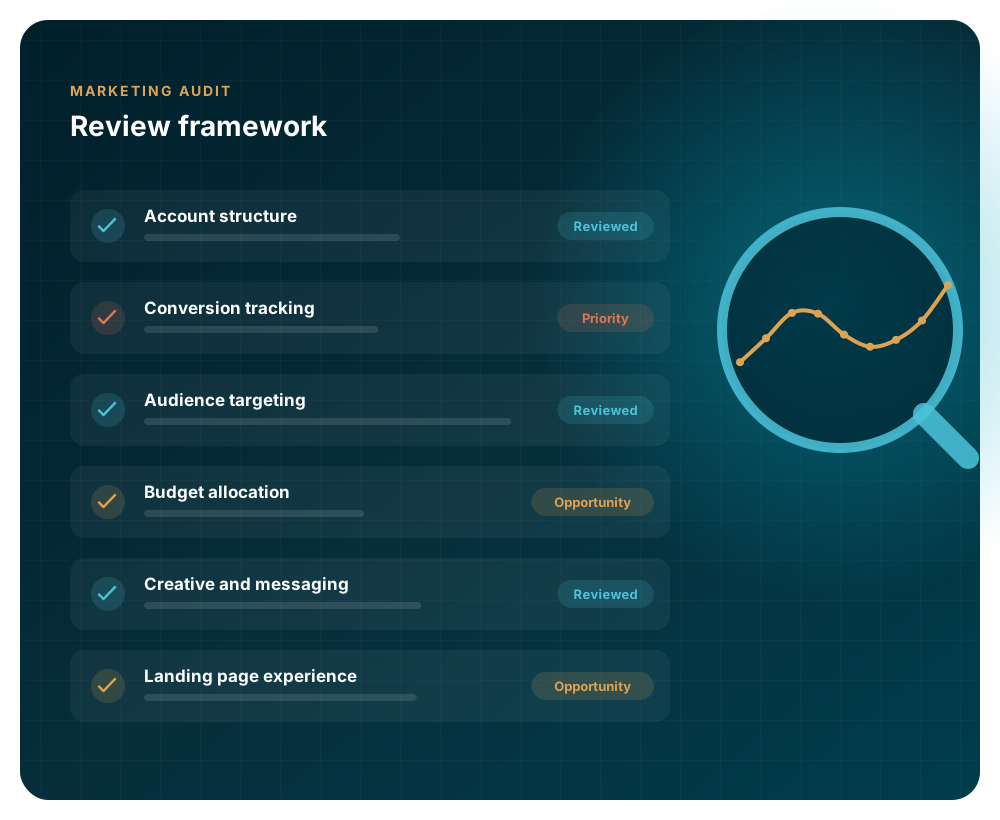
What We Review
The scope of each audit is agreed in advance and tailored to your channels, but these are the areas we typically examine.
Campaign organization, naming, settings, and whether structure supports clear control and reporting.
Trends in cost, conversion, and efficiency by campaign, device, location, and time.
Keyword, audience, and placement targeting, including overlap, exclusions, and expansion settings.
Message clarity, format coverage, testing practices, and signs of creative fatigue.
Tag setup, event definitions, duplicates, consent handling, and data accuracy across platforms.
How credit is assigned across channels and how that shapes budget and bidding decisions.
Spend distribution, pacing, diminishing returns, and alignment with business priorities.
Message match, speed, mobile usability, form design, and trust signals.
Policy alignment, disclosures, placement suitability, and data handling practices.
Gaps and overlaps between channels and where an adjusted mix may serve goals better.
Audit Methodology
Every audit follows the same disciplined sequence, so findings are consistent, evidence-based, and easy to act on.
We agree on the channels, accounts, time period, and business questions the audit should answer, along with the metrics that define success for your organization.
You grant read-only or limited access to the relevant ad platforms and analytics tools. We never ask for passwords; access is shared through each platform’s own user management.
Before judging performance, we check that conversions are tracked accurately. Many findings depend on whether the underlying data can be trusted.
We review structure, targeting, bidding, creative, and placements in each channel, and compare results across channels on consistent definitions.
Issues and opportunities are ranked by expected impact, effort, and risk, so the most valuable actions are clear.
We walk through the findings with your team and provide a written report with a recommended action plan. You decide how to proceed.
What You Receive
A clear summary of findings by area, with supporting evidence and plain-language explanations.
Recommendations ranked by expected impact and effort, separating quick fixes from strategic changes.
A working session with your team to discuss findings, answer questions, and agree on next steps.
Questions
Audits can cover paid search (Google Ads and Microsoft Advertising), paid social (such as Meta, LinkedIn, and TikTok), programmatic and display, native, video, and your analytics and tracking setup. Scope is agreed before work begins.
Timing depends on the number of channels, accounts, and the depth of analysis required. We provide a timeline with the proposal after an initial consultation.
Read-only or limited user access to the relevant ad accounts and analytics properties, granted through each platform’s user management. We never ask for passwords, and access can be removed when the audit is complete.
Audit scope and pricing are discussed during the consultation and confirmed in writing before any work begins, so there are no surprises.
No. The report is written so your internal team or another partner can act on it. If you would like our help implementing the plan, we can discuss that separately.
No audit can guarantee specific outcomes. It provides an evidence-based view of issues and opportunities. Results depend on how recommendations are implemented and on factors such as market conditions and budgets.
Request an Audit Consultation
Share a few details and we will follow up by email to discuss scope, timing, and the questions you want answered.